Free shipping from $150A free gift with every pack

No. 03Pu'er Tea

Xiao Qing Gan Pu'er

小青柑陈皮普洱
Rated 4.9 out of 5, 8 reviews

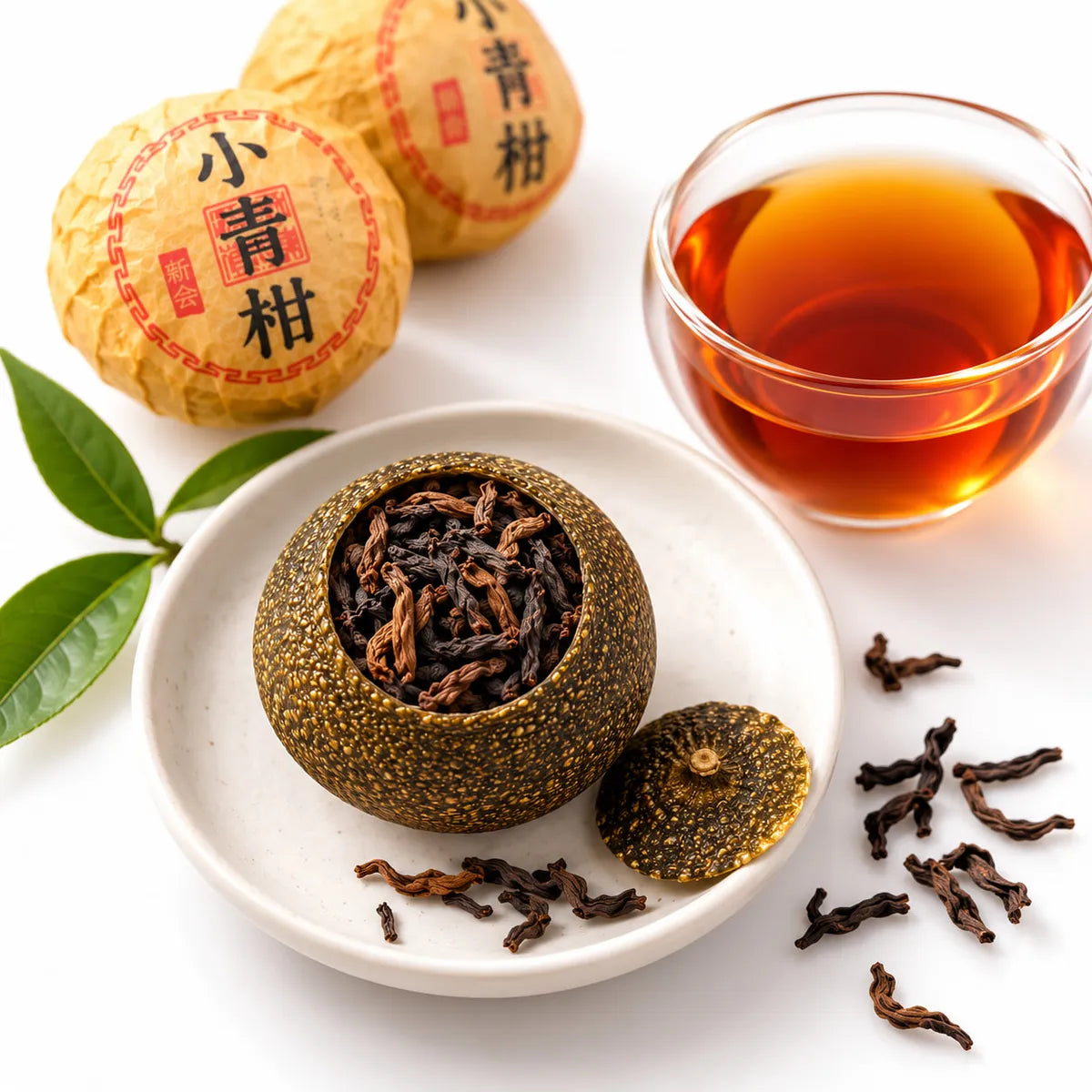
Yunnan pu'er, held in a small green mandarin.

Origin
Yunnan, China

Pu'er tea from Yunnan, encased in the peel of a small green mandarin. Deeper, darker and more contemplative, it is a tea for slow evenings and long conversations.

Choose a size

Savings compare the price per gram with the 100 g size. One free gift with every pack.

Your free gift with 250 g

  • Snow Pear Chrysanthemum5 g gift sachetFree
  • Ginseng Five Treasures5 g gift sachetFree

Both 5 g gift sachets: Snow Pear Chrysanthemum and Ginseng Five Treasures.

Quantity 1
  • Free shipping from $150, otherwise $9.99
  • Order now, delivered in about 10 days. Ships from China, with tracking
  • Damaged, wrong or lost? Replaced or refunded

About this tea

Xiao Qing Gan Chenpi Pu'er Tea

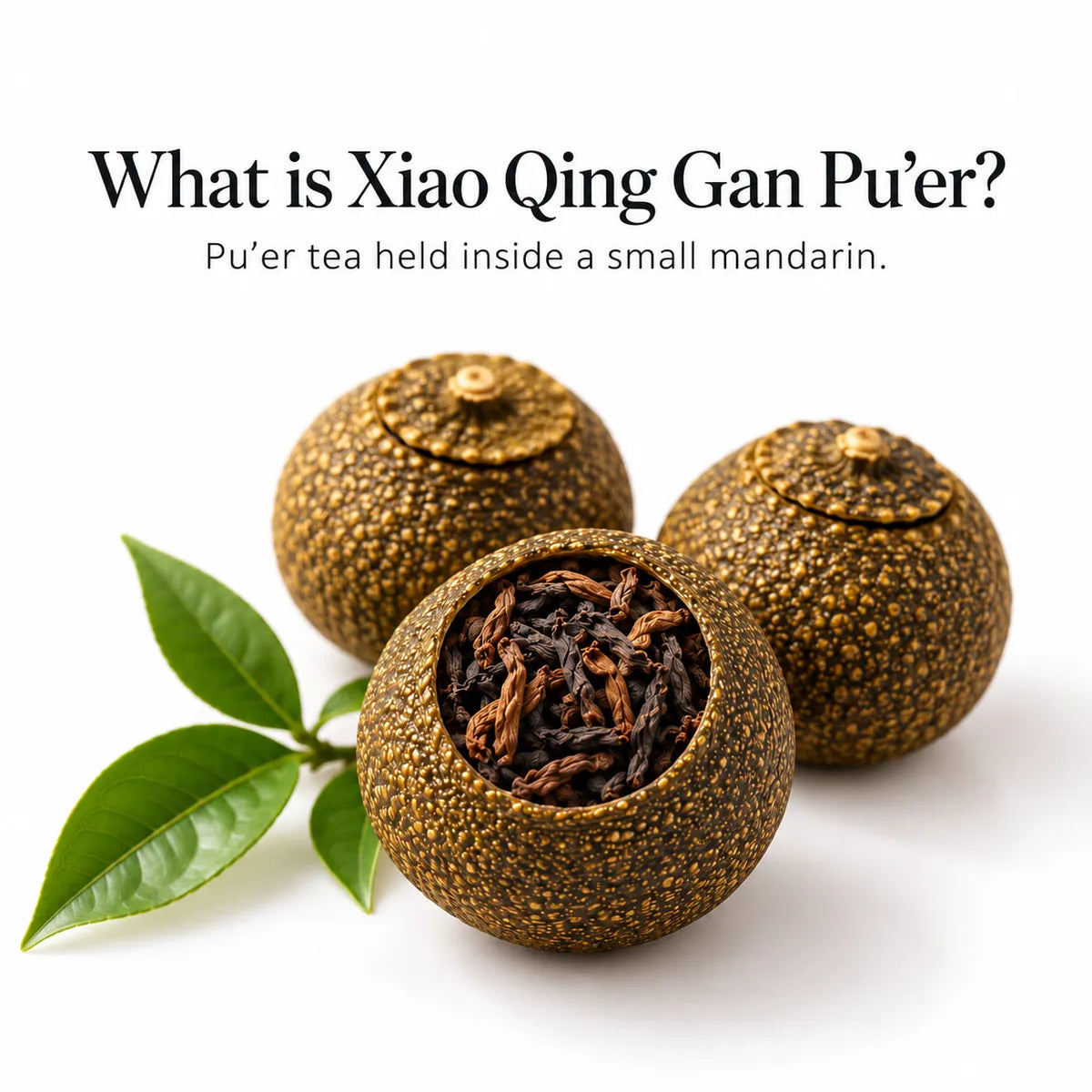
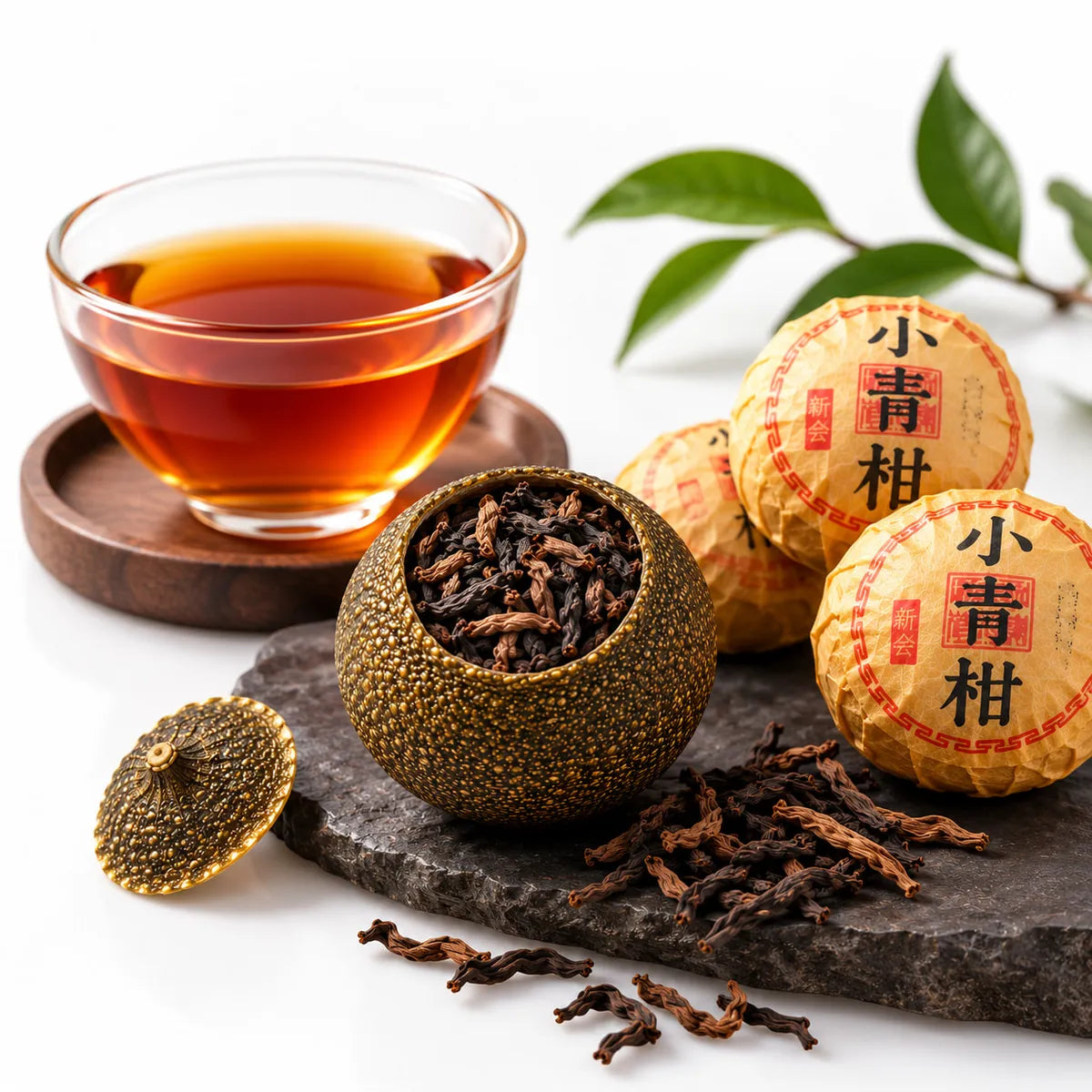
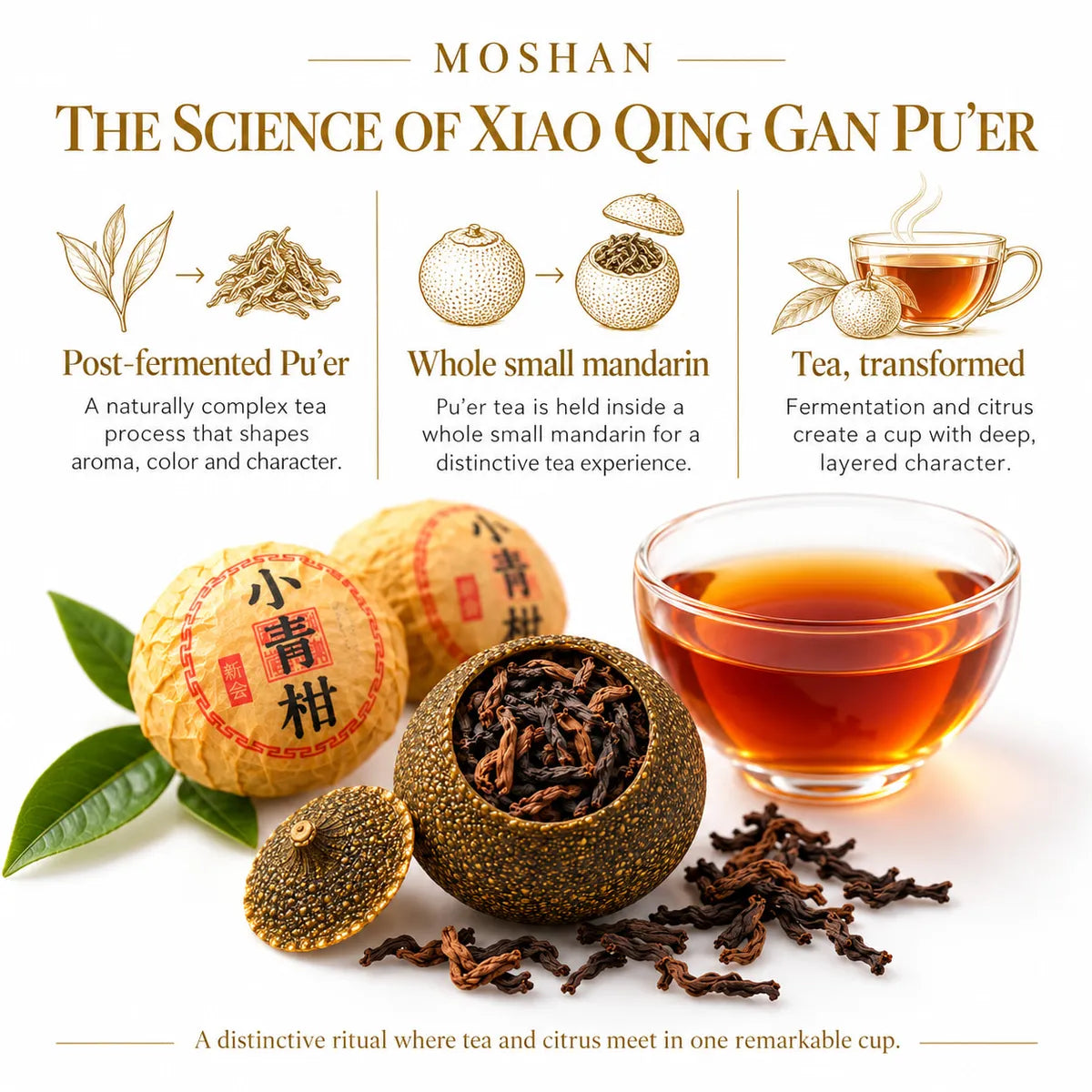
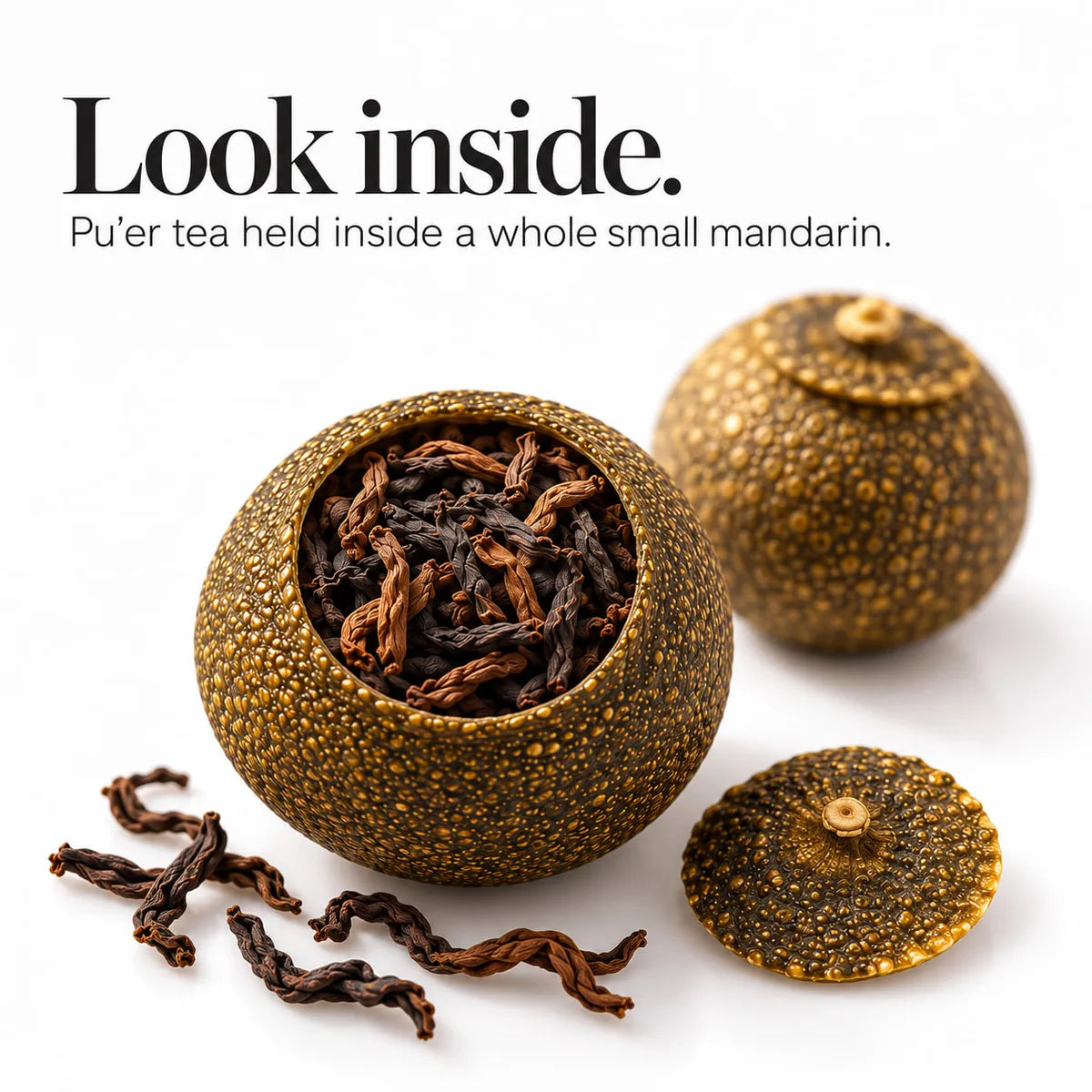
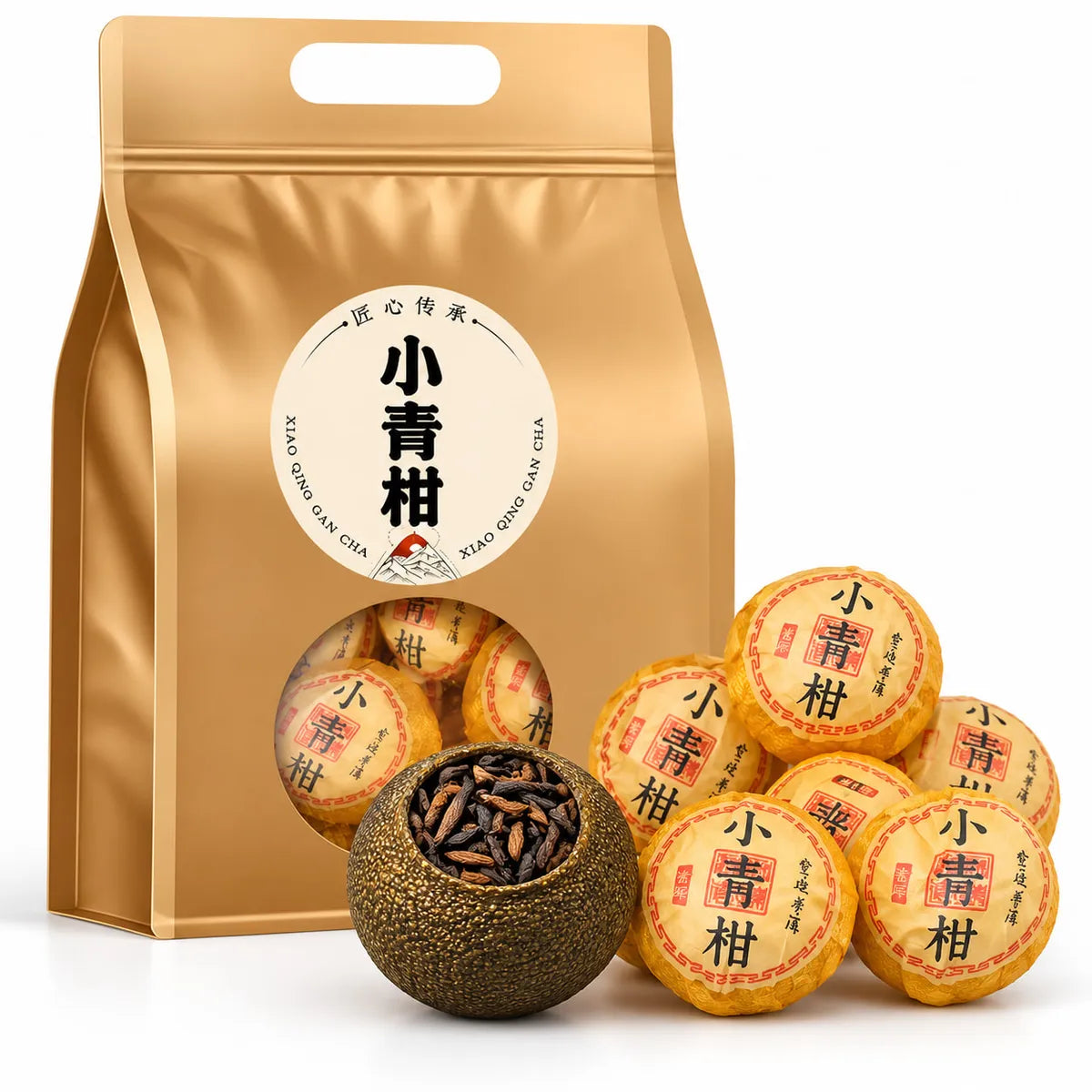
Xiao qing gan means “little green mandarin”. It is a tea of two parts: the peel of a small mandarin, hollowed out and filled with pu-erh tea from Yunnan, then dried. Infused together, the two become a single cup.

It belongs to a long Chinese tradition of pairing tea with citrus peel, where the depth of the tea meets the brightness of the fruit.

Pu'er tea comes from Yunnan, in China's far southwest, one of the oldest tea regions in the world. Our pu'er is from Yunnan.

To make xiao qing gan, small mandarins are picked while still green. The fruit inside is scooped out through a small opening, the peel is filled with pu'er and closed with its own lid, and the whole is dried slowly. In Chinese tradition, dried mandarin peel, chenpi, has long been used in cooking and with tea.

A deep red-brown cup, smooth and full. The earthy depth of the pu'er is lifted by the fresh, zesty note of the peel, and the balance shifts from one infusion to the next.

As a tea made with pu'er, it contains caffeine.

A cup for the evening, for the end of a meal, or for long conversations that are in no hurry to finish.

Infuse one whole mandarin in a small teapot. For a stronger citrus note, break a little of the peel into the pot. One mandarin gives many infusions, so keep the leaves and come back to them.

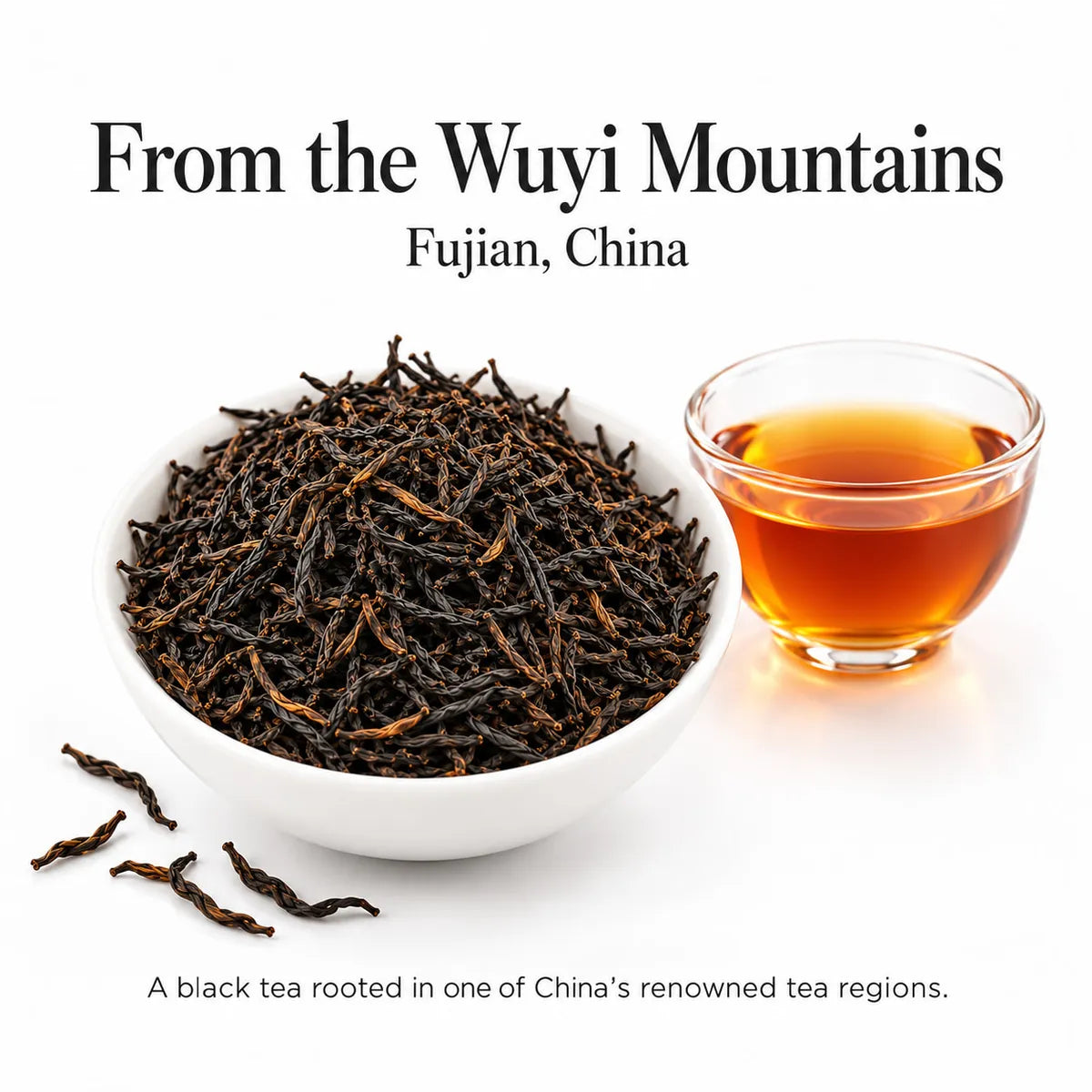
For slower afternoons, there is also our Wuyi black tea. And our teas are made to be given: see our Chinese tea gifts.

Leaf
One mandarin per small teapot (150 to 200 ml), whole or gently opened
Water
Freshly boiled, 95 to 100 °C (203 to 212 °F)
Rinse
Rinse briefly with hot water and discard
Time
30 seconds to 1 minute, lengthening with each infusion

Our guide to the Chinese tea ritual sets out each step.

Tea
Pu'er tea with mandarin peel
Origin
Yunnan, China
Sizes
100 g, 250 g, 500 g, 1 kg
Composition
Pu'er tea, small green mandarin peel
Caffeine
Contains caffeine
Storage
Keep sealed, in a cool and dry place, away from light and strong aromas.

What is xiao qing gan tea?
Xiao qing gan means “little green mandarin”. A small mandarin is picked while still green, hollowed out through a small opening, filled with pu-erh tea from Yunnan, closed with its own lid and dried slowly. In English it is often called tangerine, mandarin or citrus pu-erh, and pu-erh is also written pu'er or puerh.
How do you brew and drink xiao qing gan?
As general guidance, place one mandarin, whole or gently opened, in a small teapot of about 150 to 200 ml (5 to 7 oz). Rinse it briefly with freshly boiled water, 95 to 100 °C (203 to 212 °F), and pour that away, then infuse for 30 seconds to 1 minute. One mandarin gives many infusions, each a little longer than the last.
Does xiao qing gan have caffeine?
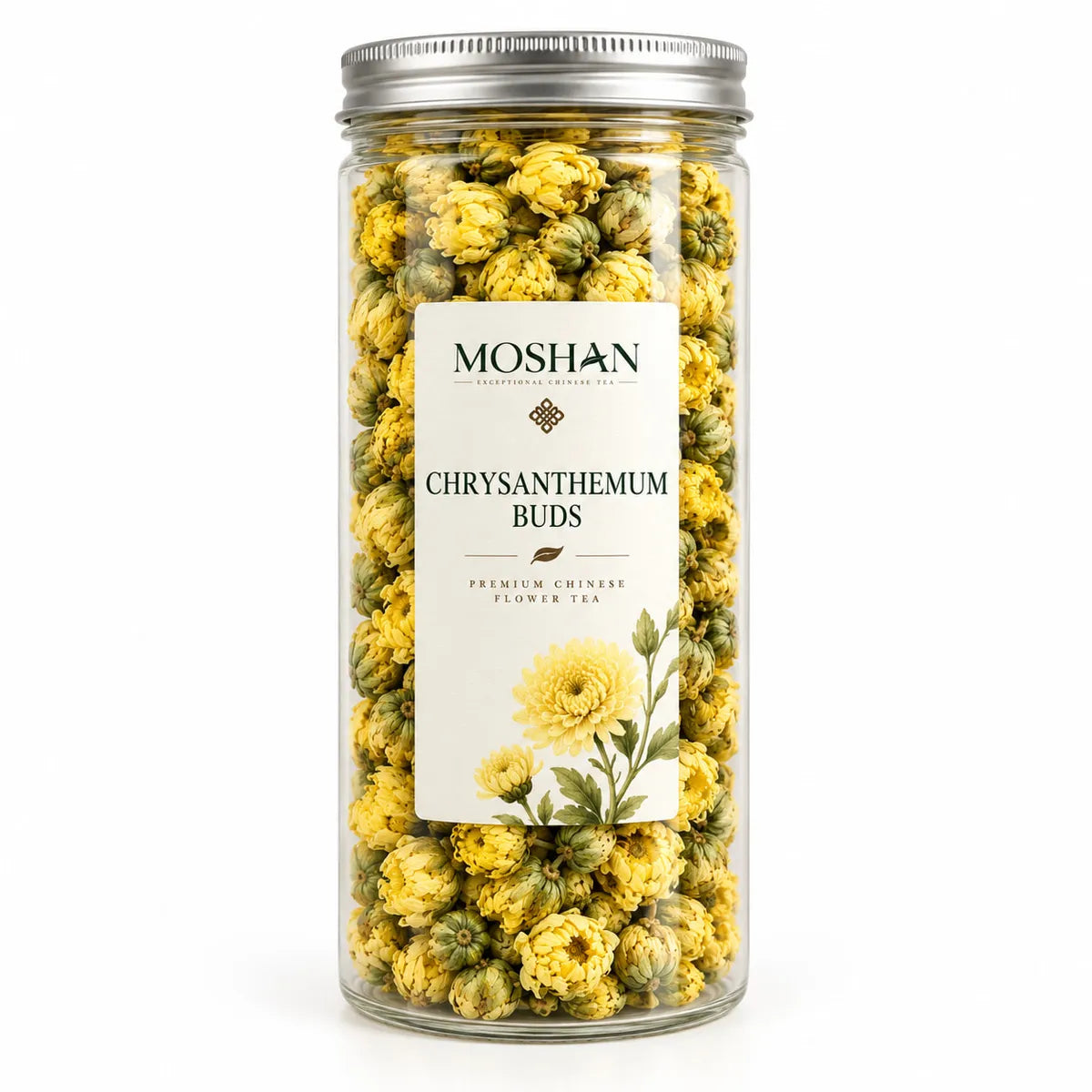
Yes. As a tea made with pu-erh, xiao qing gan contains caffeine, as do our green and black teas. If you would like a warm cup without caffeine, our Chrysanthemum Buds contain no tea leaves, only whole chrysanthemum buds, so they are naturally caffeine-free.
What does xiao qing gan taste like?
It brews a deep red-brown cup, smooth and full. The earthy depth of the pu-erh is lifted by the fresh, zesty note of the mandarin peel, and the balance shifts from one infusion to the next. Break a little of the peel into the pot for a stronger citrus note. It is a tea for slow evenings and long conversations.
Where can I buy xiao qing gan tea in the US?
Here, from MOSHAN. We ship to the United States from China, with a tracking number, and delivery takes 5 to 15 business days. It comes in four sizes, $45 for 100 g, $90 for 250 g, $150 for 500 g and $270 for 1 kg, and every pack comes with a free gift, up to 300 g of free tea with 1 kg. Shipping is free on orders of $150 or more, otherwise $9.99.

More questions about our teas are answered in our FAQ.

Reviews

What our guests say

4.9out of 5, 8 ratings

  • Wonderful calming tea with both a very satisfying smell and taste to it. Love it, thank you very much Moshan.

    Jennifer

  • When I first opened the tea pouch I was amazed at the beautiful fresh scent of the leaves. A truly delightful tea that I highly recommend.

    Mary

  • I bought this tea because I loved the appearance. The tea that arrived looks exactly the same as the picture, which you can't say of all merchants online.

    Kim

  • Earthy at first, then the citrus comes through. Really nice combination.

    Ethan

  • I liked the balance between the pu’er and the orange. Not too strong.

    Hailey

  • Very aromatic and easy to drink.

    Dylan

  • The citrus note makes this tea feel much fresher than regular pu’er.

    Brooke

  • Deep flavor, smooth finish, and a pleasant orange aroma that lasts.

    Logan

Reviews shared with us by our customers.

Community

Join the MOSHAN community.

Like more than 10,000 customers before you. A few of their tea moments, at home.

  • A woman at a sunny wooden table, holding a glass of green tea, a bowl of tea leaves beside her.
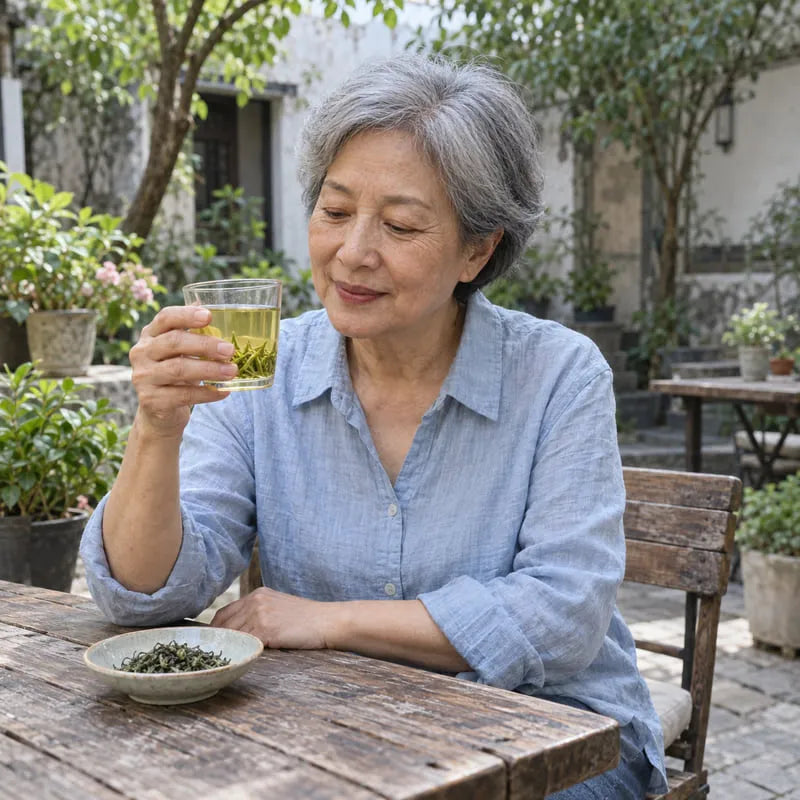
  • A woman with grey hair on a garden terrace, holding a glass of green tea, a bowl of leaves on the table.
  • A smiling woman in her kitchen, holding up a glass of green tea with its leaves.
  • A woman with curly hair on her sofa, holding up a glass of green tea.
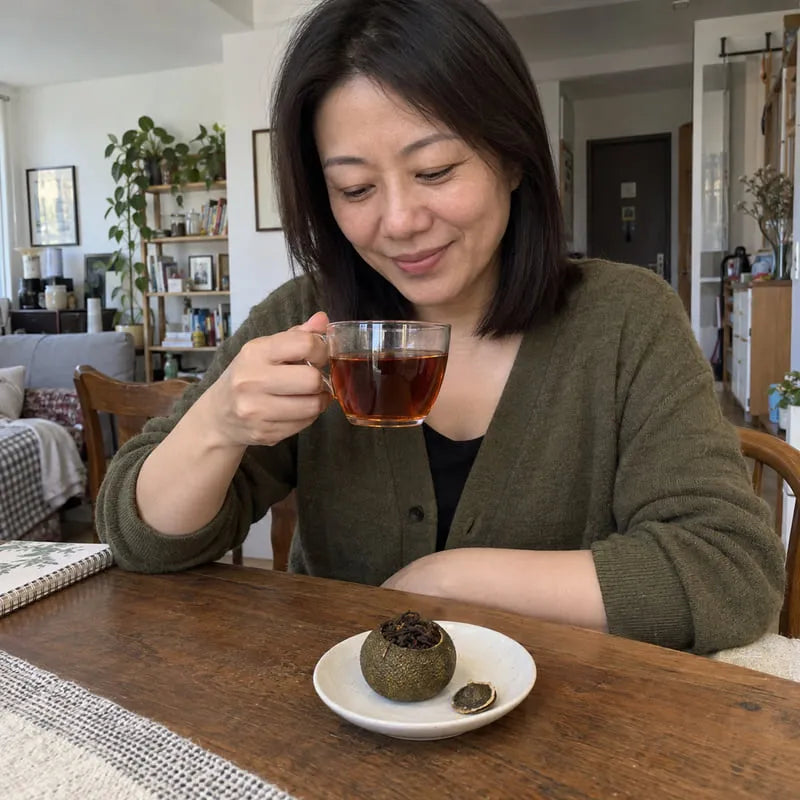
  • A woman at her dining table with a cup of amber tea and a small mandarin of pu'er on a dish.
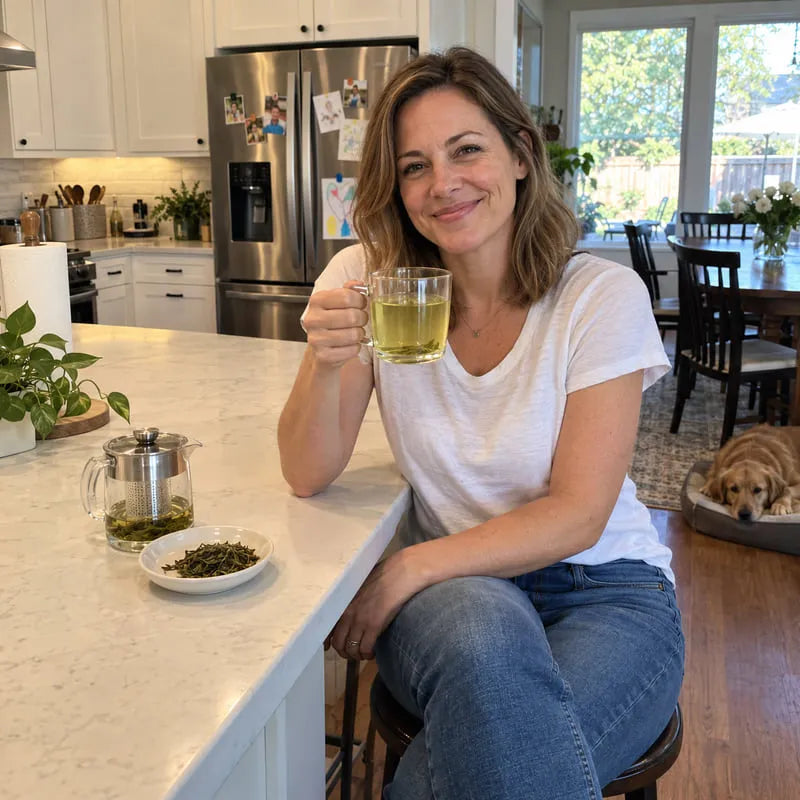
  • A woman at a white kitchen counter with a glass of green tea, a teapot and a dish of leaves beside her.
  • A woman on a city balcony with a cup of amber tea and a small mandarin of pu'er on the table.
  • A woman on a porch, holding a glass of green tea, with a glass teapot and a bowl of leaves beside her.
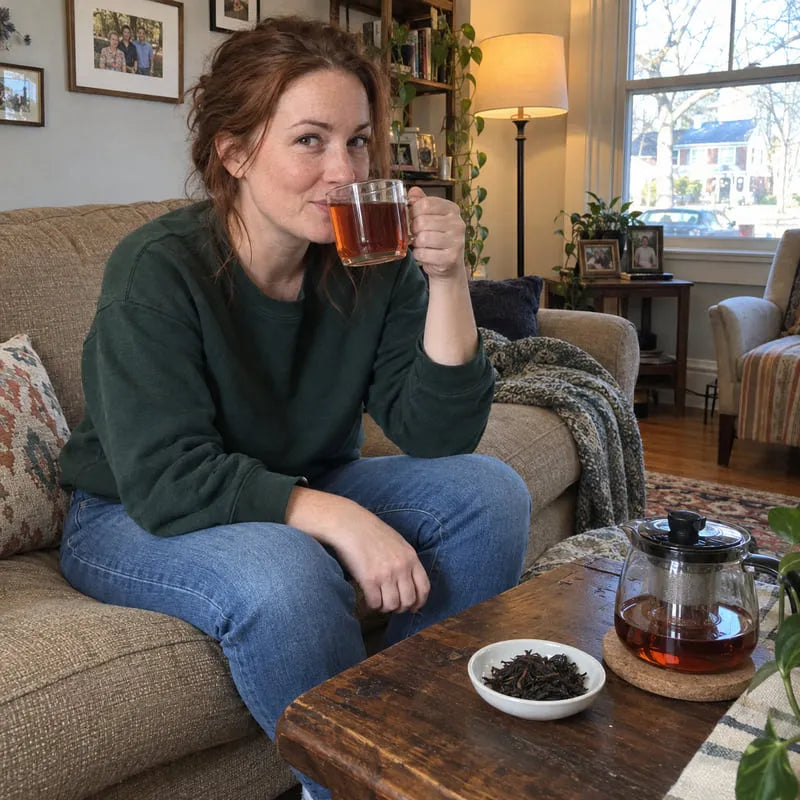
  • A woman on her sofa sipping amber tea, a glass teapot and a dish of dark leaves on the table.
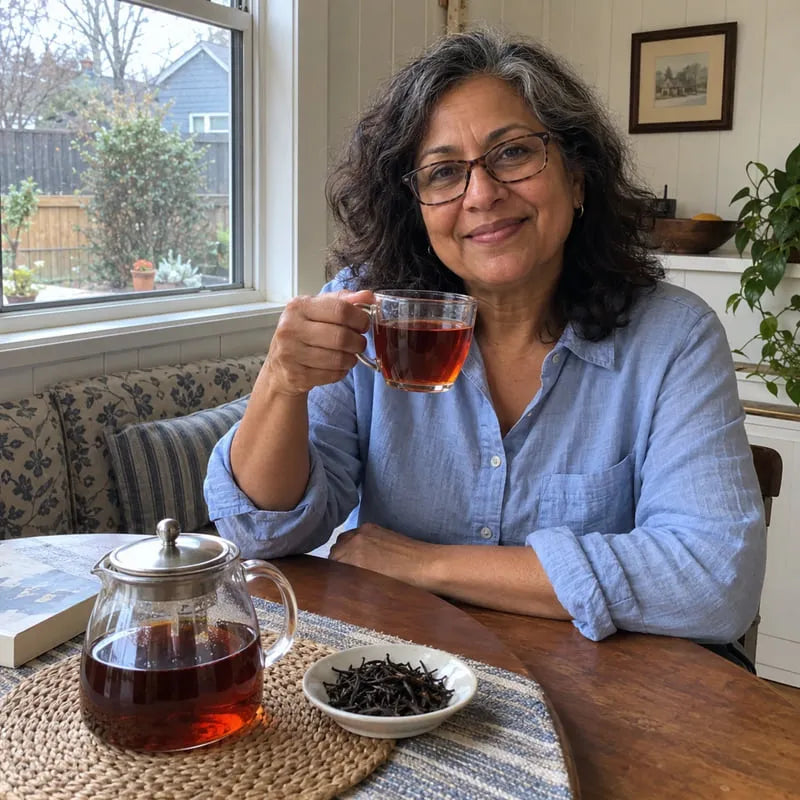
  • A woman with glasses at her table, holding a cup of amber tea beside a glass teapot and a dish of dark leaves.
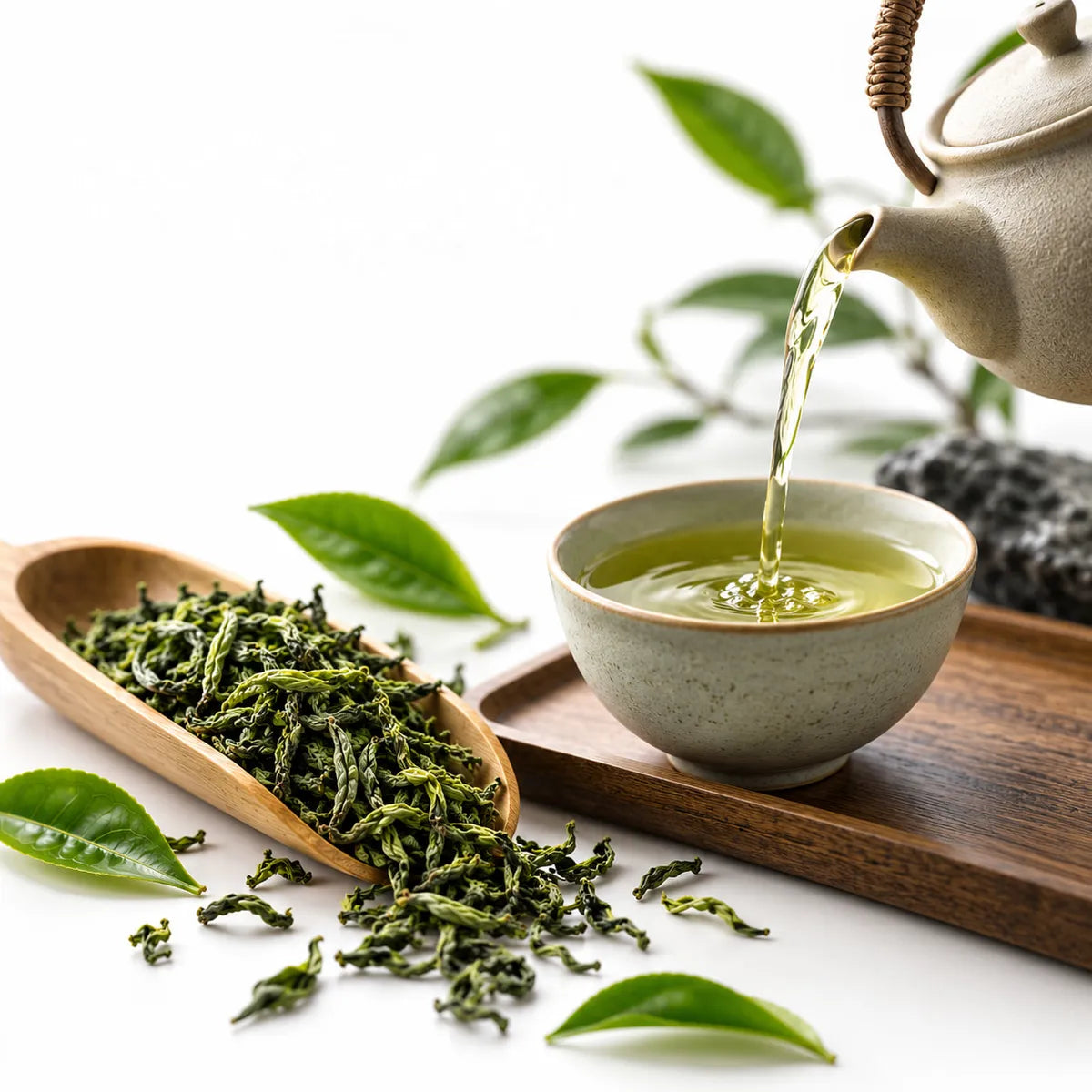
Pale green tea poured from a stoneware teapot into a speckled cup on a walnut tray, a scoop of leaves beside it.

The Ritual

Prepared with care, remembered for longer.

Warm the vessel. Measure the leaves. Pour, wait, and pay attention. The ritual of Chinese tea is simple, and it is the surest way to bring out everything a fine leaf has to offer.